- English
- French
- German
- Portuguese
- Spanish
- Russian
- Japanese
- Korean
- Arabic
- Greek
- German
- Turkish
- Italian
- Danish
- Romanian
- Indonesian
- Czech
- Afrikaans
- Swedish
- Polish
- Basque
- Catalan
- Esperanto
- Hindi
- Lao
- Albanian
- Amharic
- Armenian
- Azerbaijani
- Belarusian
- Bengali
- Bosnian
- Bulgarian
- Cebuano
- Chichewa
- Corsican
- Croatian
- Dutch
- Estonian
- Filipino
- Finnish
- Frisian
- Galician
- Georgian
- Gujarati
- Haitian
- Hausa
- Hawaiian
- Hebrew
- Hmong
- Hungarian
- Icelandic
- Igbo
- Javanese
- Kannada
- Kazakh
- Khmer
- Kurdish
- Kyrgyz
- Latin
- Latvian
- Lithuanian
- Luxembou..
- Macedonian
- Malagasy
- Malay
- Malayalam
- Maltese
- Maori
- Marathi
- Mongolian
- Burmese
- Nepali
- Norwegian
- Pashto
- Persian
- Punjabi
- Serbian
- Sesotho
- Sinhala
- Slovak
- Slovenian
- Somali
- Samoan
- Scots Gaelic
- Shona
- Sindhi
- Sundanese
- Swahili
- Tajik
- Tamil
- Telugu
- Thai
- Ukrainian
- Urdu
- Uzbek
- Vietnamese
- Welsh
- Xhosa
- Yiddish
- Yoruba
- Zulu
Cold Chain Packaging Bags for Fresh Food and Temperature-Sensitive Products
When fresh produce, frozen seafood, or temperature-sensitive goods move through a distribution network, the packaging holding them is the last line of defence against spoilage. Cold chain packaging bags are purpose-built carriers that keep products within a safe temperature window—from refrigerated ranges of 2–8°C down to frozen states of -18°C or lower—while protecting contents from moisture, impact, and contamination. For procurement teams handling millions of units per year, choosing the wrong bag means broken cartons, product loss, and unhappy downstream partners. This guide walks through what matters most.
Understanding Cold Chain Packaging Bags: Key Concepts and Functions
What Makes a Bag "Cold Chain Ready"
A bag can be used in the cold chain if its material stays strong at temperatures below zero without breaking, warping, or letting smells into the food. Normal plastic bags can break when the temperature drops below -10°C. Cold chain packaging bags that are made just for that purpose use certain grades of HDPE or PE resin that stay flexible and don't break easily at -18°C and below.
Material Composition and Why It Matters
The HDPE used to make Luming Plastic's bags is all new—no recycled filler or secondary resin blends. FDA 21 CFR 177.1520, EU 10/2011, and EC 1935/2004 food-contact guidelines are met by virgin HDPE. That compliance is important for procurement chiefs who have to deal with store checks or import inspections, since one batch that doesn't follow the rules can stop an entire shipment.
Load-Bearing Design for Real Warehouse Conditions
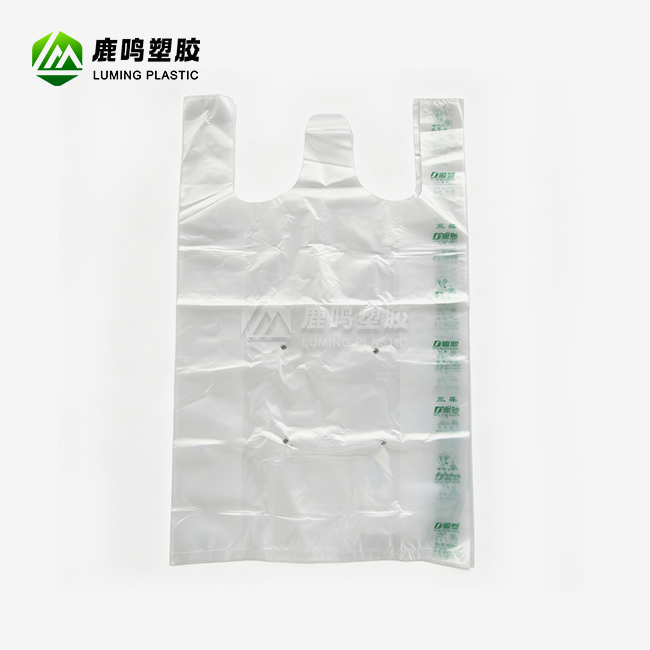
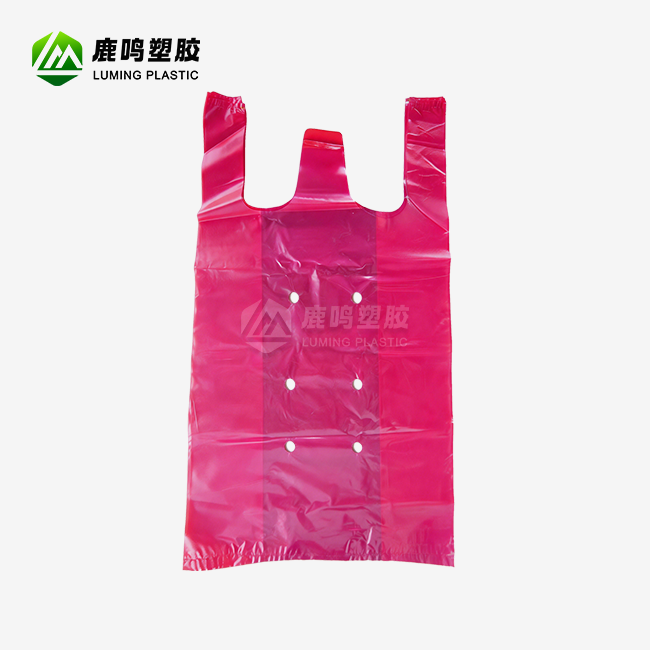
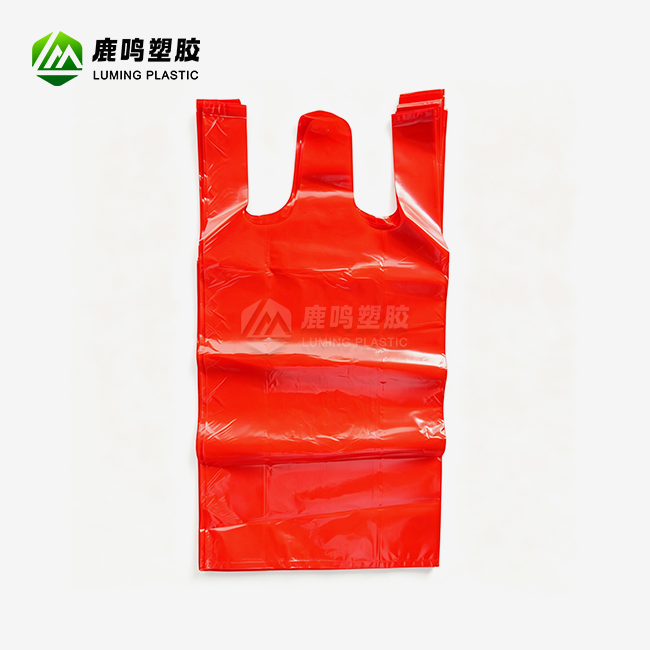
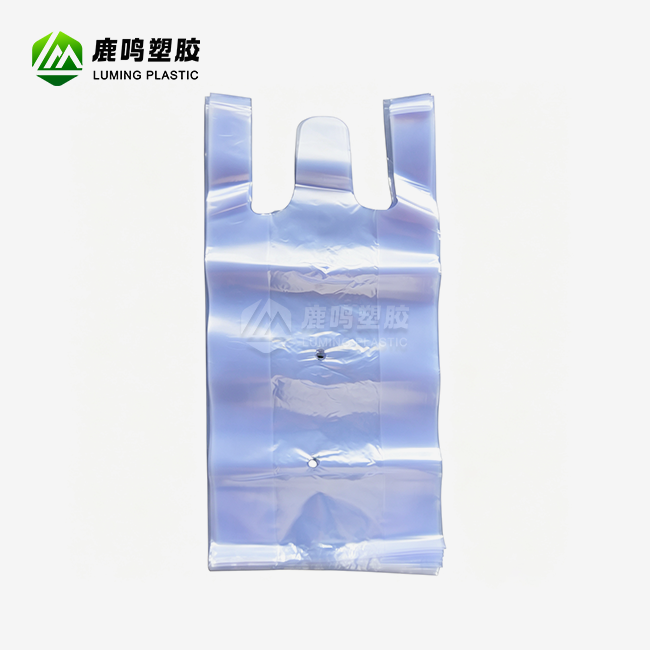
A bag that falls apart when it's full slows down sorting lines and damages goods. Luming Plastic's bags can hold between 5 and 10 kg, 10 to 15 kg, or 25 to 35 kg. The seamless T-shirt handle spreads the weight evenly across the bag body, so pickers can carry a full load without having to worry about the handle cutting into their hands or the seam coming apart where the two parts meet.
Comparing Cold Chain Packaging Solutions: Making Informed Procurement Decisions
Rigid Coolers vs. Flexible Bags
Rigid EPS coolers are great for keeping packages warm over long distances, but they take up a lot of room in the warehouse, even when they're empty. When not in use, flexible HDPE cold chain packaging bags can be stored flat, taking up up to 80% less shelf room than hard-sided coolers. That space efficiency directly leads to lower storage costs for high-frequency front-end warehouse operations that change goods every day.
Single-Use vs. Reusable Options
The cost per unit of single-use HDPE bags is lower, and there is no chance of contamination with them being used again in food environments. When a business ships between 5,000 and 50,000 items every day, single-use bags save money on labor costs because they don't need to be washed, inspected, and restocked. Luming Plastic's bags are made from clean, raw plastic, so they can be recycled in food-contact streams after they've been used.
Cost-Per-Unit vs. Total Cost of Ownership
Sometimes, procurement teams only look at the cost per bag and miss the bigger picture. A cheaper bag that breaks under 12 kg of weight leads to product spills, extra work for repacking, and the possibility of cargo loss claims. When damage rates are taken into account, a slightly higher-spec bag that has been tested to be resistant to impacts at low temperatures usually has a lower total cost per successful delivery. You should do that math before you place your next order.
How to Choose the Best Cold Chain Packaging Bags for Your Business Needs
Match Load Tier to Product Category
As a general rule, frozen fruit and vegetable packs weigh between 5 and 15 kg. On the other hand, bulk frozen protein cuts or wholesale produce weigh between 25 and 35 kg. When you match the right load tier, you avoid both over-engineering (which means paying for capacity you don't need) and under-speccing (cold chain packaging bags that fail at the load point). Luming Plastic has all three levels, and the wall thickness is the same for all SKUs.
Verify Regulatory Compliance Before Committing
This is what FDA 21 CFR 177.1520 says about polyolefin food-contact packaging for the U.S. market. For goods coming into Europe, EU 10/2011 applies. Luming Plastic's production line has quality control that is equivalent to ISO 9001, and their material certifications can be viewed by auditors, which is a practical requirement for any process that qualifies suppliers.
Evaluate Customization and Lead Time Together
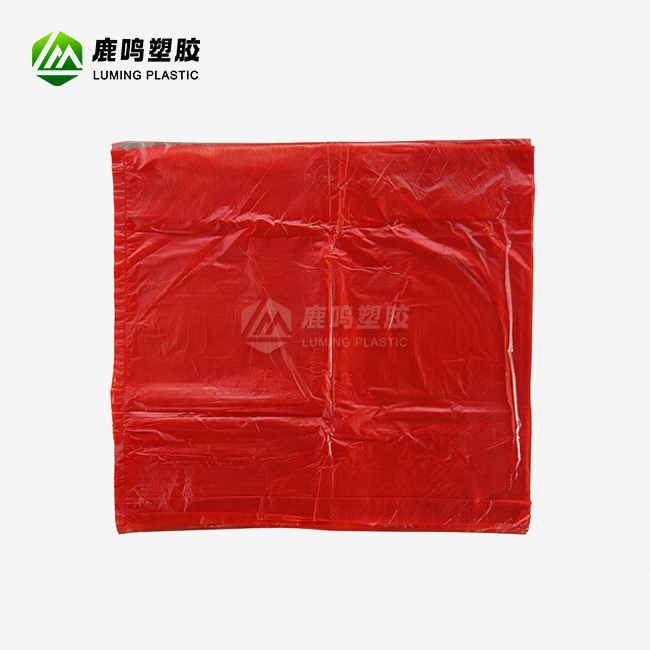
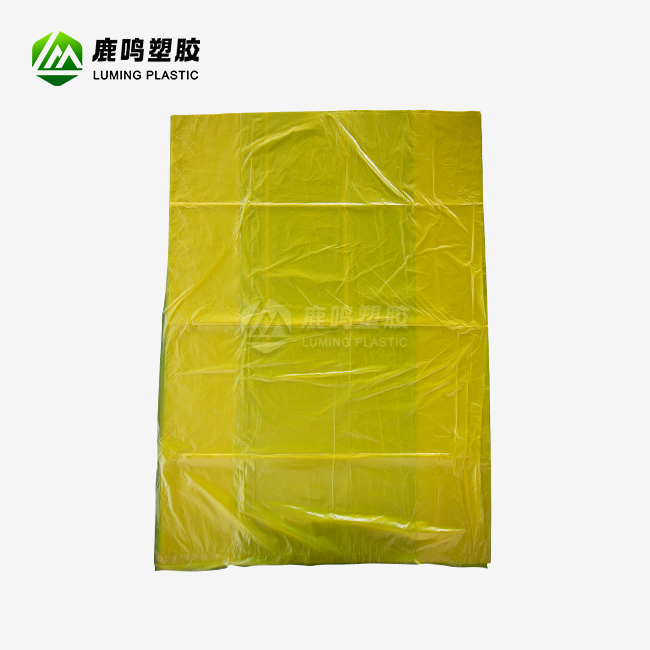
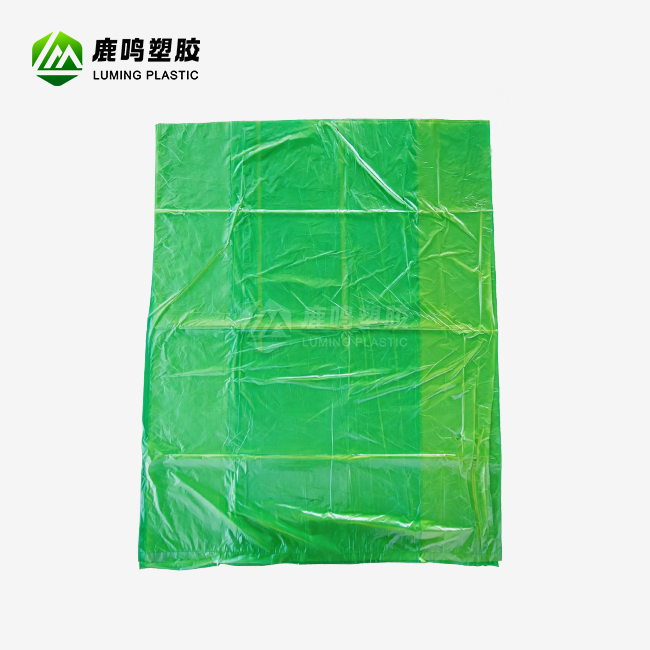
Color-coded bags make picking less likely to go wrong in cold storage areas with a lot of different SKUs. A 2019 study in the International Journal of Production Economics found that using visual code to sort things in a warehouse cut the number of mistakes by 17–23%. Luming Plastic can print in multiple colors and make custom logos. They have a 24- to 48-hour sampling cycle, and normal custom orders are shipped in 3–5 days, which works with tight plans for restocking.
The practical list for any cold chain packaging tender is made up of these selection criteria: load level, compliance documentation, and customization turnaround time. Most mistakes in buying happen when one of these three checks is skipped.
Implementing Cold Chain Packaging Solutions: Best Practices and Case Studies
Specify Before You Sample
Before you ask for samples, write down your temperature zone (refrigerated vs. deep-frozen), the daily amount, the average SKU weight per bag, and any color-coding needs by category. This sheet of specifications lets a seller send you the right HDPE grade and wall thickness for your needs instead of sending a general sample of cold chain packaging bags that might not be representative of production.
Combine Bag Specs with Complementary Controls
When used with other layers, cold chain bags work best. Match the right bag level with gel packs or dry ice pieces that are sized for the time of your trip. A well-designed HDPE bag keeps its shape and keeps water out even when the cooling agent gets warmer near the end of the 24–48 hour delivery window. A thin, fragile bag can't do this.
A Real-World Performance Example
A regional online fresh food store that handles 15,000 orders a day switched from using a standard PE bag to a brand-new HDPE bag that has been tested and proven to be resistant to impacts at -18°C. Their reported in-transit breakage rate dropped from 3.2% to less than 0.6% over the course of 90 days. That change cut down on claims of lost goods and increased warehouse flow because pickers didn't have to spend as much time fixing broken bags on the sorting floor.
For cold chain packaging to work, you need to plan ahead: be clear about what you want, test it in real life, and only increase the size after making sure that performance data supports it.
Conclusion
Choosing the right cold chain packaging bags for distribution has a direct effect on how quickly food goes bad, how efficiently workers do their jobs, and how reliable the brand is. The starting points that can't be changed are virgin HDPE construction, confirmed food-grade compliance, and the right load capacity. Luming Plastic has been making things for 30 years, can make blown film and bags in-house, and can ship stock orders within 24 hours. This helps procurement teams that need both performance and supply stability. If you are looking at your current packaging supplier, the information above serves as a good starting point.
FAQ
What temperature range can these bags handle?
The raw HDPE cold chain packaging bags made by Luming Plastic are made to work in cold chain conditions as low as -18°C without cracking or deforming. If you need to store or deliver frozen food, these are the right containers for you.
Are these bags safe for direct food contact?
Yes. These bags are made from 100% brand-new HDPE and meet the standards set by FDA 21 CFR 177.1520, EU 10/2011, and EC 1935/2004. They have no smell and don't contain any recycled materials, so they can be used directly on fresh fruits and vegetables, frozen foods, and packed meats.
What is the minimum order quantity for custom printing?
For food-grade custom orders, Luming Plastic has a low MOQ that starts at 5,000 pieces. You can get a sample in 24 to 48 hours, and normal custom production ships in 3 to 5 days.
Can I order multiple SKUs in a single shipment?
Orders of different SKUs in different load tiers and colour specs can be made. To talk about your SKU list and volume split, email the team at sales@lumingplastic.com.
How does wall thickness affect cold chain performance?
Walls that are thicker are more resistant to punctures and keep the structure stiff under load, which is most important in the 25–35 kg range. Luming Plastic keeps the wall thickness the same across production runs so that performance doesn't change from batch to batch.
Request Samples from Luming Plastic — Cold Chain Packaging Bags Supplier
Food-grade cold chain packaging bags made by Luming Plastic have been used by distribution centres in Asia, Europe, and North America for 30 years. The team has 500–800 tons of finished stock on hand, can send out normal orders the same day, and can answer questions in 15 minutes. This means they can meet tight buying deadlines. You can email sales@lumingplastic.com to get more information and to ask for samples if you need a manufacturer for a new SKU launch or a reliable long-term supply partner.
References
1. Badia-Melis, R., Mishra, P., & Ruiz-García, L. (2015). Food traceability: New trends and recent advances. Food Control, 57, 393–401.
2. Jedermann, R., Nicometo, M., Uysal, I., & Lang, W. (2014). Reducing food losses by intelligent food logistics. Philosophical Transactions of the Royal Society A, 372(2017).
3. Mercier, S., Villeneuve, S., Mondor, M., & Uysal, I. (2017). Time–temperature management along the food cold chain. Comprehensive Reviews in Food Science and Food Safety, 16(4), 647–667.
4. Tsang, Y. P., Choy, K. L., Wu, C. H., Ho, G. T. S., & Lam, H. Y. (2018). An Internet of Things–based cargo monitoring system for food supply chain integrity. Food Control, 90, 12–23.
5. van der Vorst, J. G. A. J., Tromp, S., & Zee, D. J. van der. (2009). Simulation modeling for food supply chain redesign. International Journal of Production Research, 47(23), 6837–6861.
6. Zakar, S., & Markovska, N. (2019). Visual coding and warehouse picking accuracy in temperature-controlled distribution. International Journal of Production Economics, 210, 193–202.
Get customized packaging solutions with fast professional support.