- English
- French
- German
- Portuguese
- Spanish
- Russian
- Japanese
- Korean
- Arabic
- Greek
- German
- Turkish
- Italian
- Danish
- Romanian
- Indonesian
- Czech
- Afrikaans
- Swedish
- Polish
- Basque
- Catalan
- Esperanto
- Hindi
- Lao
- Albanian
- Amharic
- Armenian
- Azerbaijani
- Belarusian
- Bengali
- Bosnian
- Bulgarian
- Cebuano
- Chichewa
- Corsican
- Croatian
- Dutch
- Estonian
- Filipino
- Finnish
- Frisian
- Galician
- Georgian
- Gujarati
- Haitian
- Hausa
- Hawaiian
- Hebrew
- Hmong
- Hungarian
- Icelandic
- Igbo
- Javanese
- Kannada
- Kazakh
- Khmer
- Kurdish
- Kyrgyz
- Latin
- Latvian
- Lithuanian
- Luxembou..
- Macedonian
- Malagasy
- Malay
- Malayalam
- Maltese
- Maori
- Marathi
- Mongolian
- Burmese
- Nepali
- Norwegian
- Pashto
- Persian
- Punjabi
- Serbian
- Sesotho
- Sinhala
- Slovak
- Slovenian
- Somali
- Samoan
- Scots Gaelic
- Shona
- Sindhi
- Sundanese
- Swahili
- Tajik
- Tamil
- Telugu
- Thai
- Ukrainian
- Urdu
- Uzbek
- Vietnamese
- Welsh
- Xhosa
- Yiddish
- Yoruba
- Zulu
Produce Packaging Transport Bags Explained: Materials, Types, and Uses
Produce packaging transport bags are heavy-duty containment solutions engineered for the post-harvest movement of fresh fruits and vegetables across distribution networks. Built from food-grade resins and tested against recognized mechanical standards, these bags protect against physical damage, moisture ingress, and temperature stress during long-haul transit. From farm-gate loading to first-tier wholesale markets, the right transport bag directly reduces post-harvest loss — an industry figure that averages 20–40% globally according to the FAO. This guide breaks down the materials, bag categories, quality benchmarks, and sourcing criteria that matter most to B2B buyers.
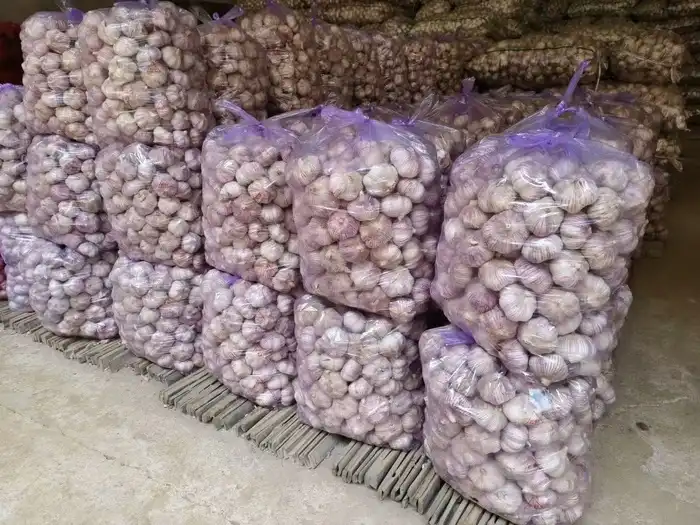
What Are Produce Packaging Transport Bags?
Definition and Core Function
Apples, potatoes, carrots, onions, and citrus fruits need to go through a lot of links in the supply chain without breaking. Produce packaging transport bags are flexible packaging units that are made to do just that. They don't work like regular shopping bags because they have to be able to handle temperature changes, vibrations, and compression all at the same time. They need to stop loss and keep things under control.
Where They Are Used?
You can see these bags at every step of the fresh food chain, from harvest sorting lines to long-haul cold trucks to trade market platforms and store back-of-house receiving areas. Due to the cold chain, if one bag breaks, all the goods on a whole pallet stack are lost.
Why B2B Buyers Prioritize Them?
People in charge of buying things at cold chain carriers, produce trading companies, and wholesale markets choose produce packaging transport bags over woven sacks for three main reasons: consistent dimensional tolerance, food-contact compliance documentation, and mechanical performance data that can be checked. All of these show that grocery companies and people who run central kitchens should check the qualifications of their suppliers.
Types of Produce Packaging Transport Bags
By Produce Category
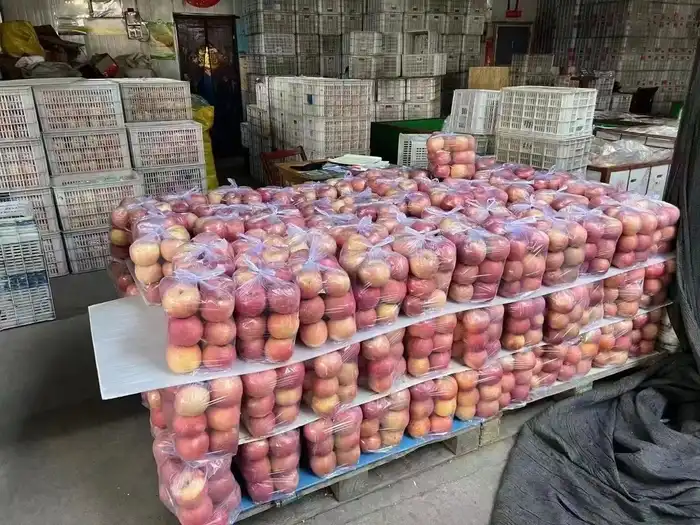
That's why apple and orange bags are made to last. They're not meant to tear easily, and the fruit inside stays smooth. As an example, potatoes and onions come in bags that can hold up to 35 kg. The outside of the bags is tough so they can handle food with rough edges without hurting the surface.
By Functional Design
By making holes that are big or small, ventilated bags let you change how much air is inside. This makes breathing take longer and slows down age. It is best to ship cold items over long distances in heavy-duty HDPE bags that don't have any holes, like the 25 μm thick bags that Luming Plastic makes. These bags are strong and keep out wetness. In this case, mass load and the health of the seal are more important than gas exchange.
Bags Versus Traditional Crates
Moving things with hard boxes made of plastic or wood isn't always the best idea. Sometimes it's better to use flexible bags for transport. They're cheaper per unit, can be sent back flat, and mold to the shape of the item, so dents don't happen when it moves inside. Bags are still the best choice for wholesale routes that move a lot of goods but don't have access to systems that pool crates.
How Produce Packaging Transport Bags Preserve Freshness and Quality
Moisture Management Through Anti-Fog Technology
Water that forms inside cold chain packaging makes mold and surface rot spread faster. Adding anti-fog masterbatch to bags makes the water not drop out as separate drops, but instead cover the inside in a thin, clear film. Microbes like places with less moisture, and you can see what's inside the bag to make sure it's safe.
Structural Integrity Under Cold Chain Stress
In the event that the temperature drops below zero, normal polyethylene films become weak. This causes them to crack and leak while being shipped. It stays flexible down to -20°C because it is made of brand-new HDPE plastic for use in the cold chain. This stops the cracks that let product spills and claims of contamination happen. To keep their shape under a 1.5× load, 25 μm bags from Luming Plastic can be stacked straight for 24 hours. That's plenty of time for fully stocked, cool cars.
Heat-Seal Reliability at the Bottom Seam
The seam at the bottom breaks a lot of the time, which is why things get lost in transit. ASTM D1922 says that Luming Plastic's produce packaging transport bags are strong enough to seal with heat, and ASTM D1709 says that they are strong enough to prevent dart impacts. In other words, they have at least 80% of the base film's tensile strength. You can load the bags and press down on them, but this seam won't break if the bags move or fall.
How to Choose the Right Produce Packaging Transport Bags
It's not just about how much a bag costs; it's also about how it works. And if you mess up, you might lose items, fail checks, and make people who buy from you in shops not trust you. These are the most important things people who work in buying should look for in staff:
- Weight capacity alignment: Match the bag's rated load to the actual packed weight of your produce unit. For single-variety bulk packs — apple cartons, orange boxes, potato loads — the 25–35 kg range is the standard working specification for long-haul routes.
- Thickness and seal grade: For cold chain and long-distance transit, 25 μm HDPE with a reinforced bottom heat seal is the appropriate choice. Thinner gauges below 15 μm are suitable only for short-haul or in-store retail applications.
- Compliance documentation: Buyers supplying supermarkets or central kitchen operators must hold FDA 21 CFR 177.1520 and EU 10/2011 food-contact certificates. Request test reports before committing to a supplier.
- Temperature range verified: Confirm the bag performs between -20°C cold chain and summer ambient temperatures above 35°C without brittleness or surface blocking.
- Customization capability: For branded trading companies, double-sided print capacity and stable color registration across large production runs determine whether a supplier can support private-label requirements.
Where and How to Procure Produce Packaging Transport Bags?
Evaluating Supplier Credentials
Check to see if the company has quality control labs, food-contact compliance certifications that can be checked, and test records that show how each batch did. When people buy and sell produce packaging transport bags around the world, they need to make sure that their quality systems meet ISO 9001 standards, that ASTM records their test results, and that they follow all the rules for both the FDA and EU markets.
Procurement Channels and Lead Times
Prices are more stable and you can learn about changes to specs faster when you buy directly from a plant instead of a trader. In general, people who buy between 100,000 and 3 million units per month get their goods directly from the factory and have their own account manager. A well-stocked maker can usually fill a basic order in 3 to 5 days, and a custom print order in 7 to 10 days.
Customization and OEM Options
Large sellers and producers of fruits and vegetables often need bags with their own names printed on them. For wholesale markets, these bags need to be a certain color and have writing on them in a language that is only used in export markets. You should be able to print on both sides of the bags, make them the right width, and be able to change styles as they come out if you want to sell produce packaging travel bags.
Conclusion
Making the right choice about the bag to use for moving fresh food has direct financial effects on the supply chain. There are no extra requirements for the grade of material, the strength of the seal, the temperature range, or proof of compliance for produce packaging transport bags. These are what make the difference between a successful distribution run and a loss claim. If a procurement manager works with a lot of buyers, it can save them time, money, and trouble in the future by looking at these traits before making a choice.
FAQ
How do I prevent moisture damage inside cold chain transport bags?
Buy bags that are made with things that stop fog from forming. The water inside the bag doesn't pool as drops do with these. Instead, it spreads out as a thin film. There is no need to open the bag to see what's inside, and the rot won't spread.
What is the difference between HDPE and LDPE transport bags?
You can move heavy things farther with HDPE because it is stiffer, less likely to puncture, and better at keeping things inside. It's easier to tear, so LDPE is often used for smaller jobs in stores where tear resistance isn't as important.
Are these bags recyclable?
Most trash bags made of PE have a number 4 on them, which means they can be recycled with PE film. The brand-new HDPE bags from Luming Plastic can be recycled the same way film is.
What certifications should I request from a supplier?
To begin, ensure that the item meets the requirements of FDA 21 CFR 177.1520 for contact with food, ASTM D1922 for tear resistance, and ASTM D1709 for dart impact. You need EU 10/2011 and EC 1935/2004 forms as well to sell your goods in the EU.
What MOQ does a reliable produce bag supplier offer?
Most of the time, a factory-direct provider with the right tools will take an order of at least 5,000 units for standard specs. The price per item goes down when you buy more than 100,000 of them.
Request a Quote from Luming Plastic — Produce Packaging Transport Bag Manufacturer
For more than 30 years, Luming Plastic has sold cold chain carriers and wholesalers food-grade delivery bags for fruits and vegetables. It takes our factory 24 hours to send stock items for sales. Samples are sent out every 24 to 48 hours. You can talk to our team about your needs, get proof that we can meet them, or place a trial order by emailing sales@lumingplastic.com.
References
1. Food and Agriculture Organization of the United Nations (FAO). Food Losses and Food Waste: Extent, Causes and Prevention. FAO, 2011.
2. ASTM International. ASTM D1709: Standard Test Methods for Impact Resistance of Plastic Film by the Free-Falling Dart Method. ASTM International, 2016.
3. ASTM International. ASTM D1922: Standard Test Method for Propagation Tear Resistance of Plastic Film and Thin Sheeting by Pendulum Method. ASTM International, 2015.
4. U.S. Food and Drug Administration. FDA 21 CFR Part 177.1520: Olefin Polymers — Food Contact Regulations. FDA, 2023.
5. European Commission. EU Regulation No 10/2011 on Plastic Materials and Articles Intended to Contact Food. Official Journal of the European Union, 2011.
6. Marsh, K., & Bugusu, B. "Food Packaging — Roles, Materials, and Environmental Issues." Journal of Food Science, Vol. 72, No. 3, 2007.
Get customized packaging solutions with fast professional support.