- English
- French
- German
- Portuguese
- Spanish
- Russian
- Japanese
- Korean
- Arabic
- Greek
- German
- Turkish
- Italian
- Danish
- Romanian
- Indonesian
- Czech
- Afrikaans
- Swedish
- Polish
- Basque
- Catalan
- Esperanto
- Hindi
- Lao
- Albanian
- Amharic
- Armenian
- Azerbaijani
- Belarusian
- Bengali
- Bosnian
- Bulgarian
- Cebuano
- Chichewa
- Corsican
- Croatian
- Dutch
- Estonian
- Filipino
- Finnish
- Frisian
- Galician
- Georgian
- Gujarati
- Haitian
- Hausa
- Hawaiian
- Hebrew
- Hmong
- Hungarian
- Icelandic
- Igbo
- Javanese
- Kannada
- Kazakh
- Khmer
- Kurdish
- Kyrgyz
- Latin
- Latvian
- Lithuanian
- Luxembou..
- Macedonian
- Malagasy
- Malay
- Malayalam
- Maltese
- Maori
- Marathi
- Mongolian
- Burmese
- Nepali
- Norwegian
- Pashto
- Persian
- Punjabi
- Serbian
- Sesotho
- Sinhala
- Slovak
- Slovenian
- Somali
- Samoan
- Scots Gaelic
- Shona
- Sindhi
- Sundanese
- Swahili
- Tajik
- Tamil
- Telugu
- Thai
- Ukrainian
- Urdu
- Uzbek
- Vietnamese
- Welsh
- Xhosa
- Yiddish
- Yoruba
- Zulu
HDPE vs. LDPE Produce Transport Bags: Which Is Better for Shipping Fresh Produce?
Selecting HDPE or LDPE for sourcing produce packaging transport bags for long-haul fresh produce logistics has a direct impact on your cargo loss rate, cold chain performance and sourcing cost. HDPE bags are stronger, with better tensile strength, puncture resistance and weight bearing capability, making them the best option for the heavy duty transit of root vegetables, citrus and bulk goods in the 25-35kg range. Fragile products do better with flexible LDPE bags. For most B2B cold chain and wholesale distribution businesses, HDPE is the better workhorse.
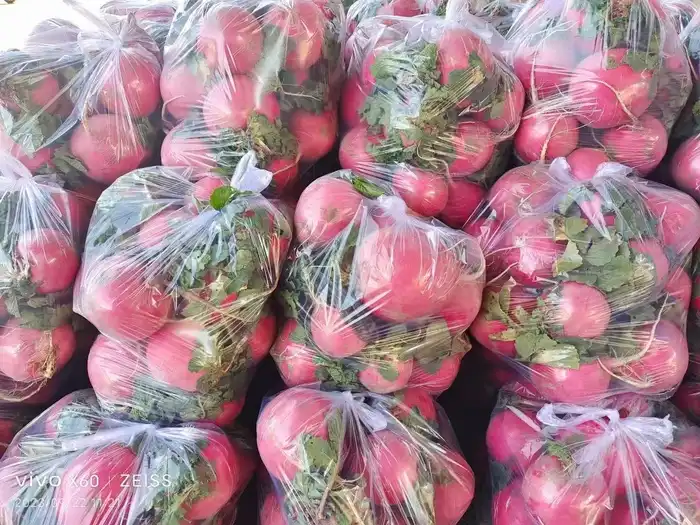
Understanding HDPE and LDPE Produce Transport Bags
It's helpful to know what makes these two products different before you compare how well they work. Because the molecules in them are arranged in different ways, they behave physically in very different ways.
What Is HDPE?
It is composed of molecules that are all lined up and extremely near. It is highly robust when pulled tight and remains rigid and does not rip or cut due of the way it is constructed. HDPE bags are perfect for carrying fresh food over long distances since they don't flex and can contain up to 35 kg of weight. You can trust them to make good orange cases, potato bags, and apple boxes because of this.
What Is LDPE?
Low-Density Polyethylene (LDPE) is softer and more bendable because its molecules are bent. You can put herbs, berries, and leafy greens in this bag without worrying about it tearing. Produce packaging transport bags made of HDPE, on the other hand, are stiffer than LDPE and can hold more weight at the same film thickness.
Shared Compliance Standards
Both EU 10/2011 and FDA 21 CFR 177.1520 include standards concerning how to treat food that can be satisfied by these two products. When both are constructed from fresh plastic, they don't add any chemicals that are dangerous for food. Either one allows you to export fruits and veggies anywhere in the globe.
Comparing Key Performance Dimensions of HDPE vs. LDPE Bags
To choose between these two materials, you should look at how well they deal with price, power, temperature, and water. For B2B distribution, these are the most important things.
Durability and Load Capacity
HDPE bags are always stronger than LDPE bags. ASTM D1709 notes that 25 μm HDPE film is far less likely to be perforated by sharp stems and rough product edges than the same-gauge LDPE film. Without a 1.5× load, HDPE bags will not break for 24 hours when stacked. It is crucial to achieve this criteria for full truck loads while operating a long-distance cold chain.
Temperature and Anti-Fog Performance
The temperatures of packages change a lot as they move through the cold chain. As cold as –20°C won't change the shape of HDPE, and it's hard to break. One of the most common problems that happen when moving cold things is fixed here. Chemicals that stop fogging were added to the film while it was being made. This turns the mist into a thin, clear layer instead of drops. That means you can still see through the film while it's being sent. Sometimes LDPE can become less stiff when it's hot outside. This might help bags stay together better in the summer.
Environmental Impact and Recyclability
The Resin Identification Codes for LDPE and HDPE are 2 and 4, and both can be found in streams for PE film. HDPE is a little more well-known in the recycling business because it can be used to make more types of packaging. If your business has to follow rules about being environmentally friendly, like selling to stores or EU export markets, select a seller that offers eco-friendly and recycling-proof ways to buy produce packaging transport bags. This will help your case for buying.
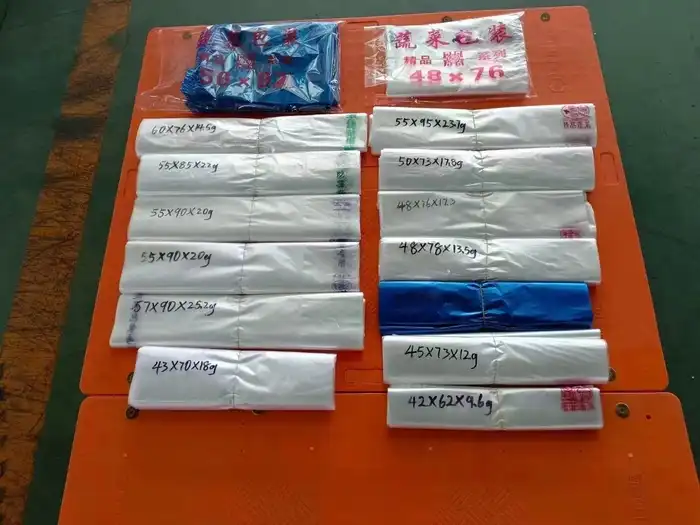
Practical Use Cases and Industry Applications
If you want to ship food, you should think about what kind of food it is, how far it is going, and where it will be handled. Here are the best times to use each type of polymer.
HDPE for Heavy-Duty Long-Distance Transit
HDPE bags are often used to carry things because they last a long time. Foods like oranges, grapefruits, potatoes, and onions that are packed in fields put a lot of weight and surface pressure on things that move. It's at least 80% stronger than the base film and the bottom of this HDPE bag can seal with heat. The bag is 25 µm thick. Most of the time, goods is lost during transport because the bottom seal breaks. This doesn't happen on a multi-day truck trip. It keeps its shape.
LDPE for Fragile and Specialty Produce
Still, LDPE is the best material for food that needs to be cushioned rather than packed tightly. Because its surface isn't as rough, LDPE is good for berries, fresh greens, baby spinach, and soft stone fruit. It can handle small amounts of contact energy and keep you from getting hurt because it can stretch. For farm-to-retail or hydroponic greenhouse export uses, LDPE is often more clear than HDPE when the product is decided by looking at the package.
Regulatory Compliance Across Markets
You can make both types of produce packaging transport bags as long as you follow the rules set by BRCGS, GlobalG.A.P., and FDA 21 CFR 177.1520. If a company wants to send goods to the US, the EU, or the Middle East, they should make sure that the sellers follow the rules set out in EU 10/2011 and EC 1935/2004. Before you buy from someone, make sure they have these licenses. This will help your company get along with stores and customs in the future.
Procurement Guide: Selecting the Right Produce Transport Bag for Your Business
When you buy food packaging, you should think about more than just the type of material. You can pick the best standard for your business by using this list of things to think about.
Should you choose between HDPE and LDPE trash bags? Here are some things to keep in mind:
- Weight and load class: For produce shipments in the 10–35 kg per bag range, HDPE is the appropriate material. LDPE is better suited to sub-10 kg or fragile item packaging.
- Transit distance and temperature zone: Long-haul cold chain routes (–20°C storage, multi-day transit) favor HDPE's thermal stability and puncture resistance.
- Handling environment: Operations using automated packing lines need bags with consistent dimensional tolerances and controlled slip coefficients; both materials can be engineered to specification.
- Certification requirements: Suppliers serving commercial buyers in regulated markets—supermarket chains, central kitchens, export traders—must provide FDA and EU food contact compliance documentation.
- Custom branding: Direct printing on bag surfaces eliminates secondary packaging cost. HDPE surfaces accept flexographic printing well for product name, origin, and weight labeling.
Future Trends and Eco-Friendly Innovations in Produce Packaging Bags
Customers are becoming more aware of stores that try to be better for the earth. Because of this, the business of packing food is changing. Most people still use HDPE and LDPE films because they are cheap and work well. On the other hand, new combinations of materials are happening more often.
Biodegradable and Compostable Polymer Blends
Foods are packed in mixes of CO2 and PBAT that are approved by EN 13432. Especially for retail uses with a short shelf life, this is true. Such things are broken down in industrial composting, which helps businesses reach their goals of having a waste-free supply chain. Because they are not as good for heavy-duty travel, they can only be used for smaller loads and shorter distances. They are stronger than HDPE and can handle a wider range of temperatures.
Modified Atmosphere and Smart Packaging
Oxygen and carbon dioxide move more slowly through the micro-perforated film structures inside the bag, which makes it take longer for the food to breathe. This keeps it fresh longer so it doesn't need to be chilled. A group called FAO says that 20 to 40 percent of fresh fruit goes bad after it is picked. When bags are packed, a lot of this loss can be stopped because they have MAP built in.
Regulatory Direction in North America and Europe
Both the European Commission and the U.S. Environmental Protection Agency (EPA) have put out "extended producer responsibility frameworks." Following these rules, people who buy and sell packaging will need to show proof that it can be recycled and track how much of it is recycled. Make sure the company you choose already has up-to-date food safety standards and quality controls that meet ISO 9001 standards. You will be ready for the new rules if you do this.
Conclusion
For most B2B buyers in cold chain logistics, wholesale distribution, or export trade, produce packaging transport bags offer a better combination of puncture resistance, load-bearing performance, and cold-temperature stability than LDPE at equivalent film thickness. LDPE remains the right choice for delicate, low-weight produce categories. The most effective procurement strategy matches material type to the specific produce, route, and regulatory context—rather than defaulting to one polymer across all applications.
FAQ
Are HDPE bags safe for direct contact with organic produce?
Yes. HDPE bags made from virgin, non-recycled resin meet FDA 21 CFR 177.1520 and EU 10/2011 food contact standards, confirming no harmful substance migration to food items. They are appropriate for both conventional and organic certified produce, provided the supplier furnishes current migration test documentation.
Which material has a lower environmental impact—HDPE or LDPE?
Both are recyclable PE materials. HDPE (code 2) has broader recycling infrastructure acceptance globally. Neither material is biodegradable in standard conditions. For operations with sustainability mandates, working with suppliers who use virgin resin sourced responsibly and offer recyclability documentation is the most practical approach currently available.
Can HDPE transport bags be reused or recycled in bulk?
Yes. HDPE film bags in clean condition can enter PE film recycling streams. Bulk recycling protocols typically require sorting by resin code and removing contamination. Many distribution centers collect used bags from receiving docks and return them to film recycling programs. Buyers sourcing at scale can negotiate take-back arrangements with their packaging supplier to support closed-loop targets.
What thickness is appropriate for a 25–35 kg produce bag?
A film gauge of 25 μm in HDPE with a bottom heat-seal strength of ≥80% of base film tensile strength is the standard specification for bags carrying 25–35 kg loads over long-distance transit routes.
Partner with Luming Plastic for Your Next Bulk Order
Bulk and cold chain buyers from outside of China have been buying food-grade produce packaging transport bags from Luming Plastic for 30 years. The size of our building is 16,500 m², and we send out stock orders every day. What makes the time it takes to finish a custom order different? We follow the EC 1935/2004, FDA 21 CFR 177.1520, and EU 10/2011. Send an email to sales@lumingplastic.com to get samples or a price for a large order from our team of suppliers of produce packaging transport bags.
References
1. Food and Agriculture Organization of the United Nations. Food Losses and Food Waste. FAO, 2019.
2. American Society for Testing and Materials. ASTM D1709: Standard Test Methods for Impact Resistance of Plastic Film by the Free-Falling Dart Method. ASTM International, 2016.
3. U.S. Food and Drug Administration. Title 21 CFR 177.1520: Olefin Polymers. FDA, 2023.
4. European Commission. Regulation (EU) 10/2011 on Plastic Materials and Articles Intended to Contact Food. Official Journal of the European Union, 2011.
5. Marsh, K., & Bugusu, B. "Food Packaging—Roles, Materials, and Environmental Issues." Journal of Food Science, Vol. 72, No. 3, 2007.
6. Kader, A. A. Postharvest Technology of Horticultural Crops. University of California Agriculture and Natural Resources, 3rd ed., 2002.
Get customized packaging solutions with fast professional support.